How Aluminum Foundry delivers reliability in manufacturing
Wiki Article
A Comprehensive Overview to the Different Kinds and Use Light Weight Aluminum Factory
The globe of light weight aluminum factory incorporates numerous casting methods, each serving special applications. From the adaptability of sand spreading to the accuracy of die spreading, these approaches deal with various manufacturing requirements. Investment spreading supplies detailed designs, while long-term mold casting stresses strength. Understanding the attributes of aluminum alloys is necessary for optimizing these processes. Checking out the subtleties of each casting strategy reveals important understandings for reliable task execution. What elements should one consider when picking the most appropriate method?Overview of Aluminum Foundry Processes
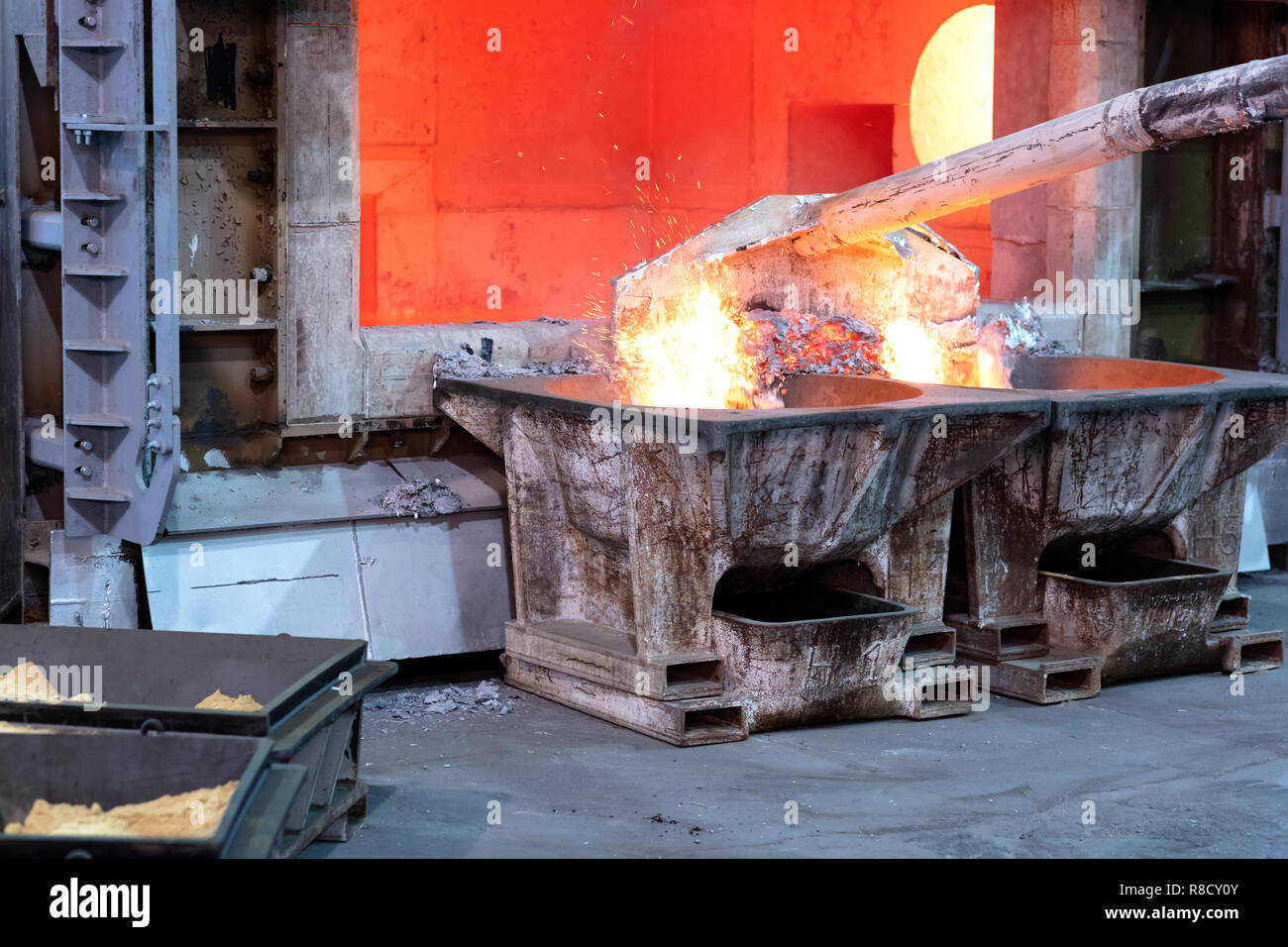
Aluminum shop procedures incorporate a collection of methods made use of to shape and cast light weight aluminum into various kinds. These procedures can be extensively categorized right into melting, molding, and finishing. The initial action involves melting aluminum, generally executed in heaters that get to high temperatures to attain a liquid state. As soon as melted, the aluminum is put into molds, which specify the final shape of the cast product.A number of molding strategies exist, such as die casting and investment casting, each offering unique advantages depending upon the preferred precision and complexity of the last item. After the aluminum has actually cooled down and solidified, the spreading undertakes ending up procedures, which might include machining, surface therapy, and setting up. These steps assure that the final item meets details tolerances and surface quality standards. With each other, these processes create a detailed approach to light weight aluminum spreading, satisfying varied commercial applications and product demands.
Sand Casting in Aluminum Foundries
Sand casting is a fundamental process in aluminum shops, defined by its use sand mold and mildews to form molten steel. This technique uses several advantages, including cost-effectiveness and convenience, making it ideal for a large range of commercial applications. Recognizing the details of the sand spreading procedure is necessary for maximizing production and accomplishing preferred product properties.Sand Casting Refine Review
The sand casting procedure functions as a fundamental approach in light weight aluminum factories, helping with the development of complex steel elements. This process begins with the prep work of a sand mold, which is formed by compacting sand around a pattern that stands for the final item. Once the mold and mildew is set up, molten light weight aluminum is put right into the dental caries, permitting it to form. After cooling down, the mold is broken away to expose the actors part. Sand casting is remarkable for its convenience, fitting numerous sizes and shapes, from small components to large frameworks. In addition, this method allows the consolidation of complicated designs, making it a preferred option for lots of sectors requiring personalized aluminum parts.Advantages of Sand Spreading
Applications in Industries
Casting procedures play an important role in various markets, with sand spreading being a famous method for light weight aluminum applications. This technique is extensively used in vehicle production, permitting the production of engine blocks, transmission cases, and numerous architectural components. Furthermore, the aerospace market leverages sand spreading to produce light-weight yet long lasting parts, adding to sustain effectiveness and performance. The electric market likewise gains from sand-cast aluminum elements, such as housings and enclosures, which provide durable defense for sensitive devices. Furthermore, the building and construction sector utilizes sand spreading for architectural aspects and components, showcasing aluminum's adaptability. In general, sand spreading in aluminum foundries serves several sectors, conference varied requirements while enhancing product residential properties and manufacturing performance.Die Spreading Techniques and Applications
Die casting is an accuracy production process utilized to generate intricate metal components with high dimensional accuracy and superb surface finishes. This strategy entails compeling molten aluminum into a mold and mildew under high stress, making certain that even intricate styles can be replicated with amazing consistency. 2 key die spreading techniques are hot chamber and cold chamber pass away spreading. Hot chamber pass away casting appropriates for steels with low melting factors and permits faster production cycles, while cool chamber die casting is ideal for higher melting point steels and offers greater control over steel flow.Applications of die spreading period different industries, including auto, aerospace, and electronic devices. Components such as engine housings, blocks, and brackets gain from the strength and light-weight residential or commercial properties of light weight aluminum. The adaptability and efficiency of die spreading make it a crucial process in producing high-quality aluminum components that meet strict industry requirements.
Investment Casting: Precision and Detail
Investment spreading is a sophisticated manufacturing process understood for its capacity to produce detailed get rid of high precision. This technique discovers applications across various markets, consisting of aerospace and automotive, where detail is paramount. The advantages of investment spreading, such as reduced product waste and enhanced surface area coating, make it a favored selection for numerous engineers.Process Introduction and Techniques
Utilizing investment casting, suppliers accomplish outstanding accuracy and detailed information in light weight aluminum elements. This process starts with producing a wax pattern, which is coated in a ceramic covering. Once the shell sets, the wax is melted and drained pipes, leaving a dental caries for the liquified light weight aluminum. The aluminum is then poured right into the mold, enabling for complicated geometries and great attributes. After cooling, the covering is escaped, exposing the aluminum component. Techniques such as vacuum investment spreading enhance accuracy by reducing air entrapment, while pressure spreading offers improved surface coating. This thorough process not just ensures dimensional accuracy but likewise minimizes product waste, making it an efficient option for generating high-quality light weight aluminum elements in numerous markets.Applications in Industries
The phenomenal accuracy and intricate information achieved through financial investment spreading make it a preferred approach in different industries. This strategy is particularly popular in aerospace, where components need complex geometries and tight resistances. In the auto industry, investment casting is used for generating parts like engine blocks and transmission housings, making sure durability and performance. In addition, the medical industry advantages from investment casting to produce specific tools and implants that satisfy stringent regulatory requirements. The versatility of light weight aluminum factory investment casting enables the production of lightweight yet strong elements, making it appropriate for electronics and durable goods too. Overall, investment casting remains to play an essential duty in enhancing item quality across diverse applications.Advantages of Investment Casting
When precision and detailed information are vital, financial investment spreading attracts attention as a very advantageous manufacturing approach. This method permits the creation of intricate geometries with tight resistances, making it optimal for applications needing high precision. The process includes producing a wax design that is covered in a ceramic shell, which is after that heated up to remove the wax and set the shell. This leads to a mold that captures fine information extremely well. Additionally, financial investment spreading minimizes product waste, as it can produce near-net shapes, lowering the requirement for considerable machining. The adaptability of products used, consisting of different light weight aluminum alloys, better boosts its allure, making it a recommended option in sectors such as aerospace and vehicle.Long-term Mold Spreading: Strength and Sturdiness
Although different casting methods exist, permanent mold spreading sticks out for its ability to generate components with extraordinary strength and longevity. This technique uses a reusable mold and mildew, usually made from metal, which permits quick warm transfer and improved mechanical buildings in the actors product. The process results in a fine-grained structure, enhancing stamina while reducing porosity contrasted to sand casting.Long-term mold and mildew spreading is specifically beneficial for generating components calling for high tensile stamina and fatigue resistance, making it ideal for auto and aerospace applications. The controlled cooling rate in the molds contributes to harmony in the microstructure, further improving the longevity of the parts. Additionally, this method can achieve tight resistances and elaborate designs, which are necessary in high-performance applications. On the whole, long-term mold casting provides a dependable solution for manufacturers seeking lasting and robust aluminum components.
Typical Light Weight Aluminum Alloys and Their Attributes
Recognizing the different light weight aluminum alloys is necessary for makers aiming to improve performance in permanent mold and mildew spreading applications. Numerous common aluminum alloys exhibit unique features matched for particular usages.
For applications calling for good and lightweight resistance to warmth, the 6061 alloy is favored for its convenience and weldability. On the other hand, the 7075 alloy, recognized for its high strength-to-weight ratio, is mostly used in aerospace applications. Each alloy gives unique advantages that producers should consider to guarantee peak efficiency in their details applications.
Picking the Right Light Weight Aluminum Shop Process for Your Job
Choosing the ideal aluminum foundry process is important for attaining suitable cause any kind of manufacturing task. Various methods, such as sand spreading, pass away spreading, and financial investment spreading, offer distinct advantages customized to specific needs. Sand spreading is flexible and Aluminum Foundry cost-effective for huge parts, while die spreading succeeds in producing high-volume, dimensionally precise elements. Investment casting is favored for detailed layouts and remarkable surface area finish.Elements influencing the option of procedure include the wanted complexity, production quantity, and budget restraints. Additionally, the specific light weight aluminum alloy chosen might dictate the ideal procedure, as particular alloys do better under specific casting problems. Understanding the task's needs and the attributes of each method assists in making an informed choice. Ultimately, picking the appropriate light weight aluminum shop procedure not just enhances product top quality but also maximizes manufacturing performance, leading to effective end results in manufacturing ventures.
Often Asked Concerns
What Industries Largely Utilize Light Weight Aluminum Foundry Products?
Aluminum shop products are largely utilized in the automobile, customer, aerospace, and building goods markets. These sectors take advantage of light weight aluminum's light-weight, corrosion-resistant residential properties, making it a perfect choice for numerous applications and components.Just How Does Aluminum Recycling Impact Factory Procedures?
Light weight aluminum reusing substantially improves shop procedures by reducing resources prices, minimizing waste, and advertising sustainability. It enables foundries to create high-quality light weight aluminum items while lowering energy usage and ecological impact during the production process.What Are the Environmental Factors To Consider in Aluminum Foundries?
Environmental considerations in light weight aluminum foundries include energy usage, greenhouse gas discharges, waste management, and source sustainability. Efficient methods can minimize eco-friendly footprints, boost reusing efforts, and advertise cleaner manufacturing methods, making sure a balance in between market and environmental wellness.How Can I Make Certain Top Quality in Aluminum Castings?
To ensure quality in light weight aluminum spreadings, one should implement stringent quality assurance actions, utilize exact molding methods, monitor temperature level and alloy structure, and carry out detailed assessments throughout the casting procedure to determine and fix prospective defects. Aluminum Foundry.What Are the Usual Flaws in Aluminum Castings?
Common defects in light weight aluminum spreadings consist of porosity, shrinkage, incorporations, surface area imperfections, and dimensional mistakes. These concerns can occur from incorrect mold design, inadequate putting methods, or not enough alloy composition, eventually influencing the casting's overall efficiency and quality.From the versatility of sand spreading to the precision of die spreading, these approaches cater to various manufacturing needs. Financial investment spreading offers detailed styles, while irreversible mold and mildew casting emphasizes stamina. Strategies such as vacuum financial investment casting improve accuracy by decreasing air entrapment, while pressure casting provides improved surface coating. Numerous techniques, such as sand spreading, pass away casting, and financial investment spreading, offer unique benefits customized to details demands. Sand spreading is versatile and cost-effective for large components, while die casting succeeds in creating high-volume, dimensionally exact elements.
Report this wiki page